
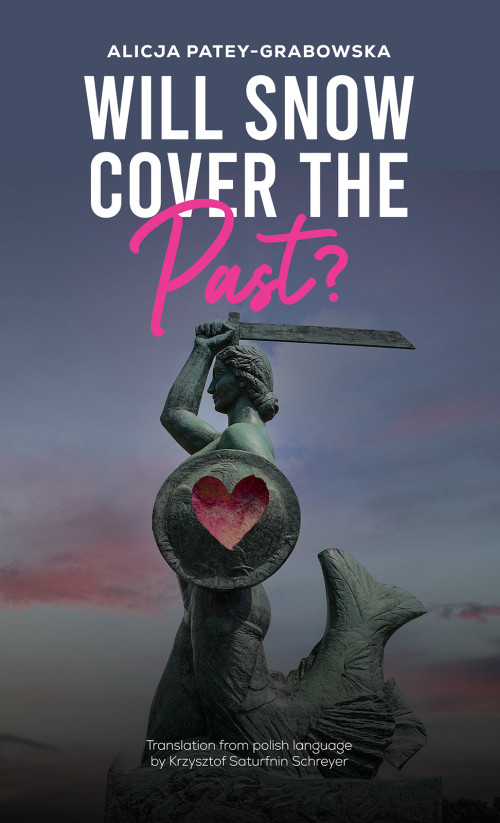
The book Will Snow Cover the Past? has deep moral meaning. Love cancels hatred and opens the door to forgiveness.
The novel consists of chapters as if they were short stories, connected by the main character—a woman. Very important background makes dramatic events in the contemporary history of Poland.
The hero of the book, a mature woman, meets in a church the German of more or less the same age. For a moment they are mutually fascinated, but they part and go their way. This provokes Wanda, the Polish woman, to a chain of memories: childhood in Warsaw under German occupation (World War II), the Warsaw insurrection, and displacement to a village.
In the book are shown such dramatic events as the murder of Polish officers in the communistic Russian camp in Katyn (World War II), the genocide of the Polish population in Wolyn (by Ukrainian nationalists), the martial law implemented by General Jaruzelski and everyday life in Poland during the Covid pandemic.
Simultaneously the young, contemporary generation is described in a very colored way. Her grandson and a girl from different, discordant political sides fall in love. In spite of poignant history (murders in Ukrainian Volyn), they go together to Maidan in Kyiv (capital of Ukraine) to support the insurrection against President Yanukovych, who opposed plans to join the European Union.
During a meeting with Pope Francis in Krakow (“World Youth Day”), they make friends with young Germans. It happened that their grandfather was searching for the woman he had met in the church. Maybe Wanda, the grandmother of Polish youths, is associated with him?
Will Snow Cover the Past?
Rich with poetic language and emotional insight, each chapter is introduced by a short poem written by the author—a renowned Polish poet—offering a lyrical prelude to the chapter’s themes.










 Discover