
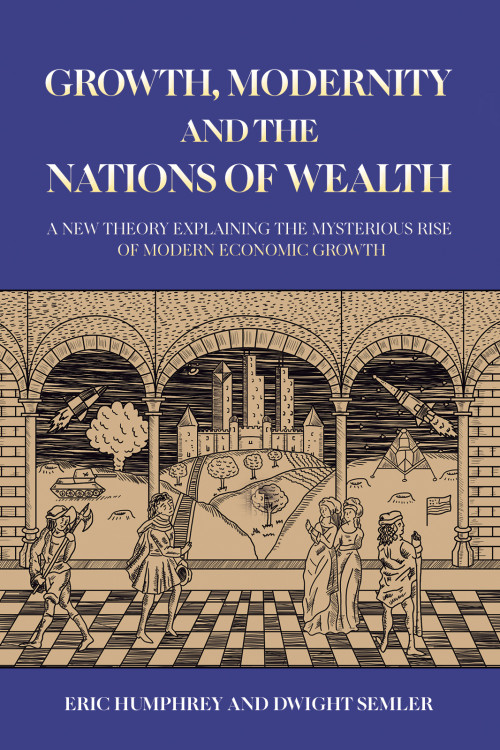
Eric Humphrey and Dwight Semler present a new theory explaining the mysterious historical emergence of modern economic growth and its even more baffling offspring, modernity. Noticeable changes in material life began less than three centuries ago, but previous theoretical accounts have failed to explain their arrival. Thinkers assumed modern wealth and morality were the universal standard driving human history. They assumed modern rights and riches were natural and normal. In this way they thought of such things as ends rooted in human nature, rather than deriving them as consequences from a historical, nonmodern baseline. Misdirected, they set out to liberate the imprisoned modern homunculus who “caused modernity” through moral education and economic institutions. Modernity became an “awareness problem.” Yet this high-maintenance modern self and its ever-growing needs are a consequence of modern processes rather than their cause. Consequently, theorists of the modern world produced comically omnipotent notions of human agency. Marxists and developmental economists saw modernity as a moral or material self-realization project, requiring only a liberator or engineer. But when their God-of-Genesis model failed the facts, they overreacted and defaulted to its alter ego—humans were passive leaves in the wind of history. Modernity thus oscillates between a chosen destiny and a given fate. With modernity represented as a historical fate, all pretense of a grand theoretical view vanishes in thick description of one damn thing after another, and the historian’s rote chronology replaces any theoretical causality, as a specific description of a particular falling rock replaces a general theory of gravity.
Understanding the modern world and how it came to be, argue the authors, is less a matter of facts than of the foundational assumptions used to link facts together into robust and coherent theories. We must un-assume our modern selves and give poverty and illiberality their just historical due. With better and more scientifically consistent assumptions, they argue, the old facts of history can be seen in a new way. Then the solution to understanding the most puzzling and abnormal of human events, the modern world itself, turns out to be hiding in plain sight.







 Discover