
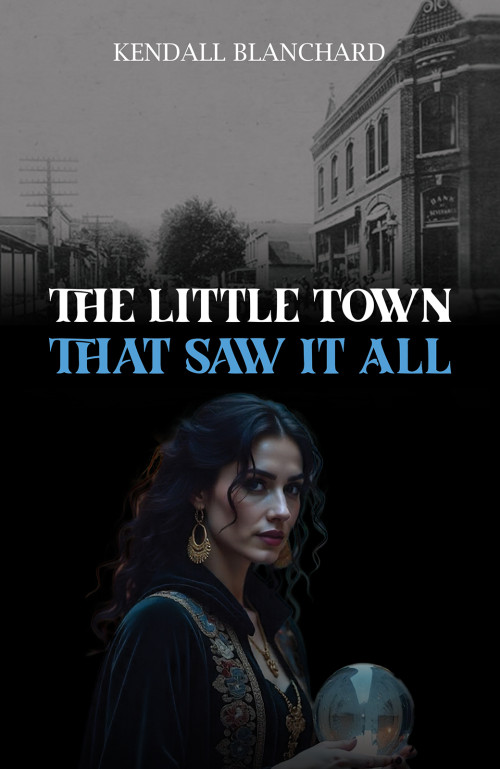
It’s a very small town with a population of just under 100, named Crossroads, set in the most northeasterly county in Kansas. It is the late 1940s, and the area’s most successful farmer is hit with a heartrending, life-changing personal tragedy. He turns to God, his preacher, and ultimately a fortune teller for answers. She turns out to be more than a fortune teller.
What follows are unexpected romances, ties to terrorists in Peru, the complexity of small-town politics, the murder of one of the town’s most unpopular citizens, and a series of mysteries, as a town with a utopian view of itself gradually sees that myth explode. It is a gripping, suspenseful, and powerful tale with a completely unexpected ending.
The strange series of events that unfolds in this little burg over a period of about two years calls into question the notion that rural Americans are less likely to commit crimes and are more patriotic, more neighborly, and more likely to adhere to and abide by Christian morals and values, than folks in the cities.
Though its farmers and small-town residents might deny it, Crossroads becomes the little town that saw it all.




 Discover