
-

The Judas Kiss
Embark on an epic journey that defies genre, seamlessly blending elements of dystopian and historical fiction while traversing time, from Eden’s ancient gardens to the enduring enclaves of the USSR, and even further, to celestial chambers scattered among the stars.
The Judas Kiss offers you a spellbinding odyssey that navigates through epochs and landscapes, unified by the presence of a mysterious child. Could he be an Armenian boy orphaned by the Spitak earthquake, a Yazidi warrior lost in a maze of time, or even an angel on a divine mission?
Witness the biblical wanderings of Moses and the poignant tribulations of a Soviet émigré. Explore clandestine labs and remote Central Asian villages suspended in the mountains. Meet a cast of eccentric scientists and cryptic sorcerers, each wielding enigmatic powers. As the narrative unfolds, humanity faces existential threats: a virulent virus and cosmic rifts that could annihilate the world.
Set against a backdrop that is both hauntingly recognizable and captivatingly otherworldly, The Judas Kiss invites you to confront the boundaries of loyalty and betrayal in a cosmos as awe-inspiring as it is perilous.
$35.95 -

The Enemies of Excellence
Excellence is the ultimate human power and the source of our greatest inventions, most successful businesses, deepest insights, furthest explorations, best performances, and most profound art.
Yet some people and companies fear, hate, or are otherwise opposed to excellence. Why?
In this book George Adams answers the question based on his many years of experience as a CPA, MBA, small business owner, and survivor of countless difficult life experiences.
$32.95 -
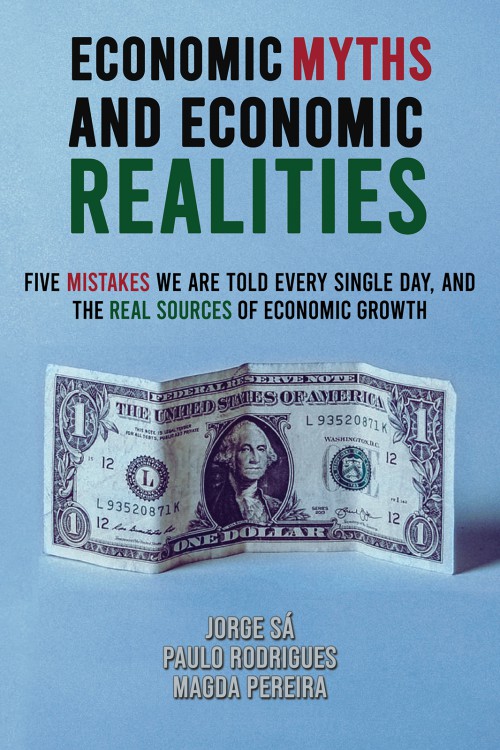
Economic Myths and Economic Realities
The world’s ten richest countries have about 60 times the income per capita of the bottom ten. Nobel Prize-winning economists have acknowledged their ignorance regarding the sources of economic growth. This explains why, despite considerable financial assistance, the gap between poorer and richer countries has grown year after year, both globally and within countries like the USA and Europe.
Using straightforward statistical diagrams, this book explains approximately 90% of the variance in income among countries or states. First, it empirically demonstrates what does not work – the myths – from reindustrialization to Keynesianism. Then, it examines the real drivers of growth by evaluating whole countries (public, social and private sectors combined, including the non-working population) as companies, assessing their business administration across areas like marketing, work culture, strategy and operations. After all, numerous multinationals are larger than countries.
The lessons are twofold: First, nothing is more pointless than perfecting the irrelevant. Second, there are no underdeveloped countries, only undermanaged ones (P. Drucker). The wealthiest countries are, overall, the best-run companies.
$38.95 -
Conscious (R)Evolution, Humanity, Insanity, and the Planet
In Conscious (R)Evolution, Humanity, Insanity, and the Planet, the author brings together two powerful insights: that all life on this planet is interconnected, and that humanity’s current path of consumerism and industrialization is leading to catastrophe. From deforestation to pollution, we are damaging the very environment that sustains us. This book asks us to stop and consider the bigger picture: as an intelligent species, why would we willingly destroy the planet that gave us life? With urgency and clarity, the author calls for a new way of living, one that recognizes our place in the natural world and uses our intelligence to create a better future for all.
$30.95 -

Basic Fractions
BASIC FRACTIONS
This book consists of 38 evenly paced lessons written at a low reading level for easy comprehension. Each lesson has:
• A single key concept
• Real-life word problems
• Examples, illustrations, and exercise questions
• Each exercise section has two levels of practice
• Guided practice with hints
• Independent practice
Contents include: equivalent fractions, simplifying fractions, working with mixed numbers, finding the least common denominator, using fractions in the four operations and in word problems.
$32.95 -

Basic Decimals
BASIC DECIMALS
This book presents an easy-to-read format for the student who has difficulty with conventional math texts. There are graphic models, a step-by-step instructional format, both guided and unguided practice exercises – and an emphasis on world problems throughout.
The focus here is on hidden problems students typically have with decimals:
- • Misplacing the decimal point
- • Omitting zeros when adding and subtracting
- • Subtracting from a whole number
Students use the four operations with decimals, plus rounding decimals and making estimates – important topics in the current curricula and on tests.
$31.95 -
Basic Algebra
BASIC ALGEBRA
This is the best book around to teach the essentials of pre-algebra and first-year algebra in an easy-to-follow, low-anxiety way.
Basic Algebra makes complex ideas simple:
• Teaching material is broken down into one- or two-page lessons, each explaining a single principle.
• Clear explanations mean a minimum of intervention is required.
• Can be used for self-instruction or as a classroom text.
• A special section with practice exercises follows each lesson.
• Chapter checkout tests reinforce individual lessons.
$28.95 -
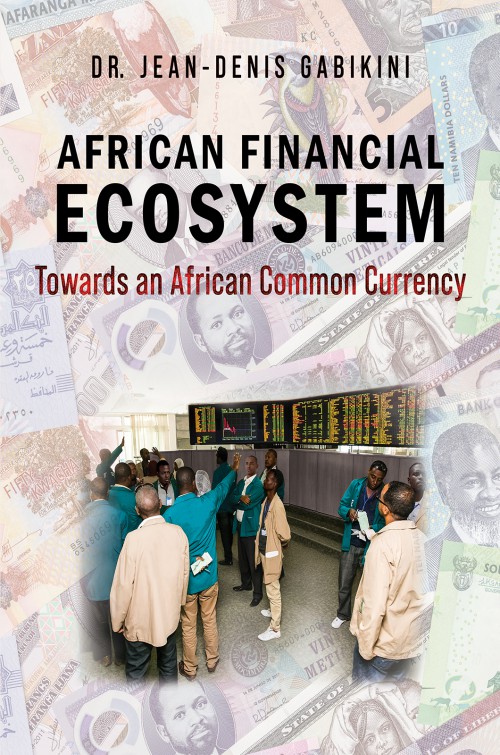
African Financial Ecosystem
Historically and contextually, various integration models were experimented with by colonial powers, but these systems largely collapsed post-independence. For instance, the French attempted to maintain cohesion but prioritized their own interests, leading to fragmentation.
Efforts in East and West Africa similarly faltered, as each nation pursued its own agenda without a unified political will. South Africa made a notable attempt, but integration never materialized; it would have required a different approach, such as the adoption of a SADC currency.
The recent endeavors of AES countries and Zimbabwe’s new currency inject fresh dynamics into this ecosystem. Concurrently, the rise of new technologies presents both challenges and opportunities for financial integration.
Public organizations and pan-African institutions play crucial roles in navigating this journey, where the political dimension holds significant sway. Additionally, international dynamics, exemplified by initiatives like those of the BRICs, further influence the landscape.
Taken together, these elements paint an intriguing picture, fostering discussions on the African ecosystem and brainstorming plausible solutions. The ultimate aim is to achieve, within a reasonable timeframe, a monetary union and a common African currency.
$42.95
 Discover
We use cookies on this site to enhance your user experience and for marketing purposes.
By clicking any link on this page you are giving your consent for us to set cookies